
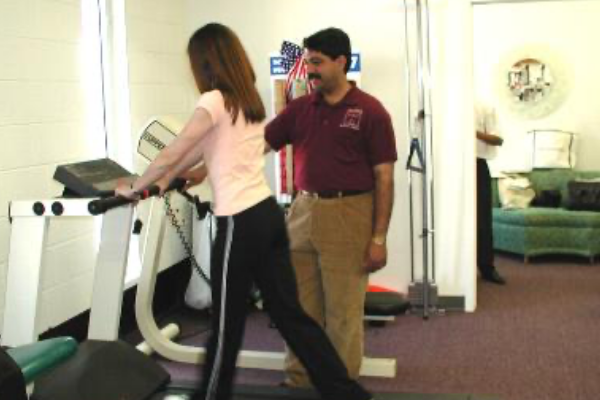
Physical therapy for a sprained ankle
Sprained ankles are a common injury that has no specific reason; whether you are a sportsman or a commoner, it can happen to anyone. It’s a painful experience that restricts your foot movement. Lake County’s physical therapy treatments are fantastic and effective for improving their patients’ lives.
Sprained ankle physical therapy is an excellent choice for all age groups, as it’s a natural way of treating foot injury, and PT has a rich history from ancient civilizations. Still, modern physiotherapists joined hands in the 19th century to improve their techniques.
Significance of Physical Therapy for Ankle
Generally, we use medication as a painkiller for even a minor injury, which undoubtedly affects our body system; sometimes, dry mouth, stomachache, drowsiness, and many other symptoms are experienced. However, physical therapies are a natural way to heal injuries and relieve pain. Lake County physical therapy for ankle offers functional movement exercises and massage therapies that tremendously build on your muscle movement, fix faulty movement issues, improve mobilisation, and relax stiff muscles that cause pain.
How to Get Physical Therapy for Ankle Sprain
Human beings consider their bodies the most precious possessions because they survive in this world through this functioning body to not only earn bread but also enjoy and accomplish their dreams. Most of the time, sportsmen and working ladies who wear heels face the issue of sprained ankles. However, the question is how to make oneself available and start the process of physical therapy for a sprained ankle.
Physical therapy is all about boosting your confidence again to be in the best version so that you can move freely without any pain and discomfort and enjoy your life. Here we are breaking down the most straightforward process to get the proper physical therapy for ankle sprain or any injury.
- First, take a medical consultation to identify the seriousness of the injury.
- Had an X-ray to determine whether it needs medication or a PT exercise.
- Don’t plan exercises without consulting a physician; otherwise, you can face horrible circumstances and worsen the situation.
- The therapist perceives the stage of the injury and will arrange an exercise plan, which may be once or twice a week.
- They also recommend some easy home exercises that include their participation in healing.
The above steps will undoubtedly refine physical movement, especially regarding the issue we are discussing, which is the physical therapy for ankle pain.
How Ankle Weights for Physical Therapy Work
Ankle weights are introduced in hand-in-hand sports and for working out. They are used for an intense workout. Wearing them signals your nervous system to work hard, and with additional weight and adjustable straps, your ankle muscles stretch more and improve range of motion.

These ankle weights for physical therapy have excellent outcomes, and those are:
- Help in balancing the density
- Help prevent injuries
- Remove stiff ankle and foot muscles
- Increase range of motion
- Strengthen your joints
Let’s look at the exercises that can benefit your sprained ankle and relax your foot muscles, so you can easily perform your regular tasks.
Standard Foot and Ankle Physical Therapy Exercises
Attending a physical therapy session is a valuable chance to learn about your body and how you can improve your overall health. There are a variety of techniques to enhance motion range and relieve pain of ankle and foot dislocation, or after surgery, stiffness, and help to improve balance and back to the functionality.
We recommend that you first visit your therapist and then start these exercises under their guidance; otherwise, the problem will become critical.
Let’s have a look at the foot and ankle physical therapy exercises to improve your walk.
Physical therapy exercises for sprained ankle
A sprained ankle is a common issue we all face in our daily lives, usually while running or walking on an unstable, curvy path, and females face this problem because of high-end fashion heels. You can easily improve the ankle swelling and pain through easy exercises; however, you should take a session with a physiotherapist to identify the injury stage.
Symptoms of this common predicament are swelling, bruising, sensations, and instability in walking.
Heel Cord stretch with bent knee: Stand facing the wall, put your unaffected leg in front and the affected leg behind, slightly bend your toes, and push your hip forward. Repeat these stretches a minimum of 10 times; it puts pressure on your ankles, which helps to reduce stiffness and pain.

The ball rolls under the foot: Sit on a stable stool or a chair, place your foot in front of the floor surface. Put a small-sized ball under your foot and roll it in a front-back motion. Do this exercise for almost two minutes.

Elastic band stretches: Take a small-sized elastic band, sit on a flat surface, the floor, and place one side of the elastic around your feet and pull the other side gradually, and after a few seconds, release it. Attempt this exercise for a minimum of 10 stretches.
Physical therapy for rolled ankle
A rolled ankle or a twisted ankle are both medical terms used for the ankle injury. When your fibrous bands are excessively stretched, they create pain, swelling, and partial tearing. Physical therapy for twisted ankle takes a minimum of 4 weeks to make it completely function.
Ankle range of motion: The easiest exercise that improves your ankle movement. Take a chair to sit and your injured foot must be in the air, and try to write all the letters of the alphabet A-Z by using your toe.
Toe pressuring: You can stand straight on your toes and pull your weight onto your toes, stay in this position for a minute, and then return to a normal standing position.
Physical therapy for ankle fracture
Fracture is a medical term used when a couple of bones are broken due to an accident or a severe sprain. It caused intense swelling, pain, and redness. Sometimes it can be settled through a few sessions of physical therapy for ankle pain; however, the intensity can lead to casting and surgery. Let’s try some simple exercises to deal with the fracture.
Leg Balancing: In initial times, stand on one leg with a firm support and try to balance your body. This will help you to stand on your feet as soon as possible.

- Heel raises: Raise heels while keeping the toes on the floor to work your knee muscles.
For the last phase, where you can practice advanced exercises for improvement, there are those that even athletes do to get back into sports activities, such as plyometrics, specific drills, and weight lifting with feet.
Physical therapy for ankle injury
Unfortunately, if you face a situation that leads to an ankle injury, you may get bruised or torn skin and muscles. Then consult your doctor for the best treatment for your injury. The recommended exercise is given below as physical therapy for ankle injury.
Eversion: Take a band and put your feet between the band and stretch it to the outer sides

Physical therapy after ankle surgery
Doctors rarely go for ankle surgeries when the knee muscle is severely or completely torn and there is no chance of healing with basic physical therapy. We are not saying that in this condition, PT is not required; instead, it’s additional help to improve and gain the movement back to normal.
Physical therapy for ankle replacement is also appropriate, as it removes the torn part of the knee and replaces it with artificial equipment that works on behalf of the actual knee.
Doctors recommend PT exercises after such surgeries to regain mobility and stability of the artificial knee.
Stairs walk: You can take some stair steps that can help you adjust to the artificial knee and smooth your walking.

Cycling: Cycling on a stationary bike is another excellent way to gain your walking ability back after surgery.
Let’s move to the severe ankle problems, which need surgery and rehabilitation for a better lifestyle.
Physical Therapy for Ankle Fracture Rehabilitation Patients
Rehabilitation is an extreme strategy to overcome physical issues and give a patient a stable and proper life to go around in the world. People with disability, whether it’s a permanent or a temporary disability, leave a negative impact on a person’s mind. Due to this, sometimes patients force their bodies to function normally. Rehabilitation centres work to help them with mental and physical problems in such conditions, especially physical therapy for ankle fracture rehabilitation.
Lake County PT rehabilitation for patients is a blessing where therapists plan therapy sessions according to your situation, give their best through unloader training, electronic stimulation, and manual therapies.
Physical therapy for chronic ankle instability
This condition occurs due to a continuous sprained ankle, which tears the ligament that supports the functions of your ankle. Physical therapy for chronic ankle instability is the best decision for non-surgical treatment.
The chronic ankle causes pain on the outer side of the ankle, irritation, swelling, and trouble walking.
Hopping: Jumping on both legs on one spot and gradually jumping left to right. You can hop with one leg as well.

- Clock ticking: Stand still on one leg with support if needed, then move the other leg clockwise to meet the leg you are standing on, and then shift to the other leg to stand.
Physical therapy for ankle tendonitis
Conservative treatments solve this issue, which is caused by the sudden injury or the excessive use of tendons that affect your lower leg and foot performance. It’s not a common problem, however, for those who are in sports or a labour that involves excessive ankle movement.
Let’s see physical therapy for ankle tendonitis.
Chair pose: You can try chair pose, which is also a yoga position, to strengthen your knee muscles and grip on the foot and leg joint.

- Steps up: Place a stool in front of you and take a step up with both feet, one by one.
The question is whether it is okay to exercise with a torn ankle tendon. The answer is yes, you can do easy daily exercises because they are a central part of the healing process.
Physical therapy for ankle ligament tear
You can walk with ligament-teared knee, but it gives a needle poking feeling and make uneasy walk. To treat this condition better, do not walk and give your knee a good rest, which helps it recover faster.
- Towel scrunch: Sit on a comfortable spot, place a towel under your foot, and scrunch it towards you with your toes. After that, push the towel back to its original position.
- Resisted ankle dorsiflexion: Get a reliable exercise band and tie both ends together with a secure hook. Put your affected ankle between the center of the band and pull it towards you. This stretch surely improves your knees.
Physical therapy for ankle arthritis
There are more than 99 forms of arthritis, and many of them are caused by the breakdown of cartilage in the knee, which can be caused by an accident or an infection. This condition can not be cured, but PT exercises can reduce pain and enhance the motion. Physical therapy for ankle arthritis includes those who work on the range of motion, as given below:
- Ankle Pump: Ankle pumping is a process in which you move your toes upwards and down to make stretches like you are pressing car brakes.
- Toe Spreads: Sit straight on the floor with straightened legs, move your toes apart from your fingers as far as possible.
- Marble Pick Up: Use your toe to pick up small marble pieces from one bowl and shift them into another bowl.
All these exercises improve your physical stability and give you back your old strength to accomplish your daily tasks and live an everyday life.
Wrap up
Physical therapies are not a modern technique, but have definitely developed in more effective ways. Physical therapy for ankle injury is the best choice for non-surgical treatment and to preserve and protect your natural muscles. Our Lake County physical therapy clinic offers the best treatments for foot and ankle pain through evaluation and ergonomic training. This article will surely benefit you in choosing the correct treatments for your sprained ankle physical therapy.